
Cool Sudoku
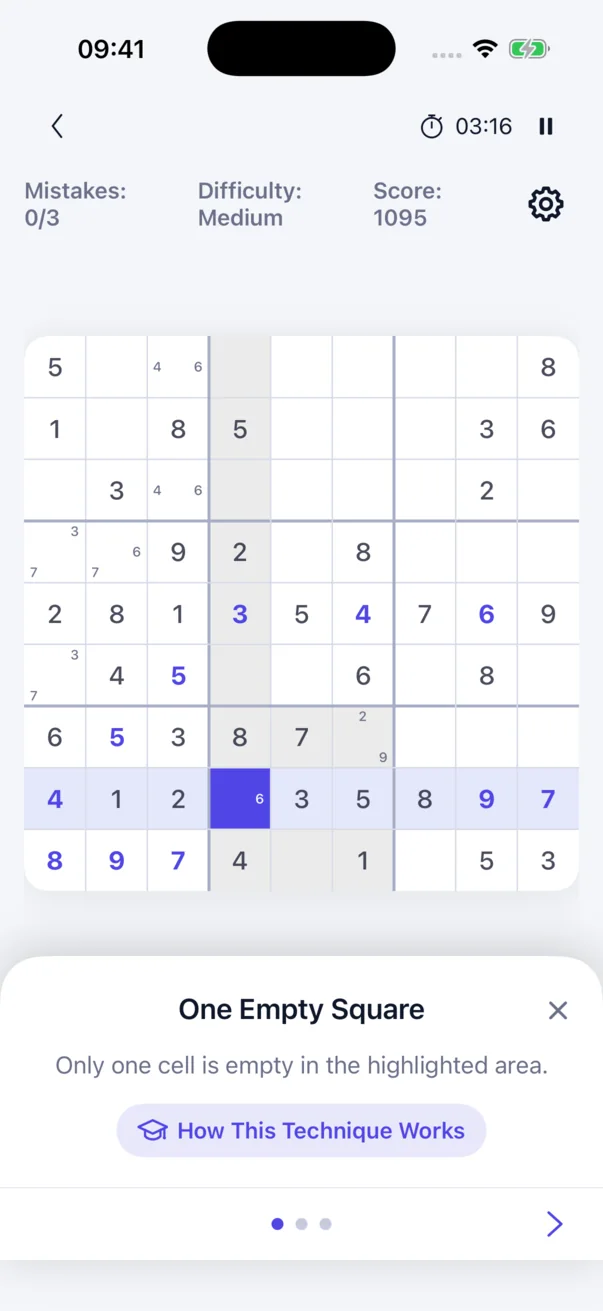
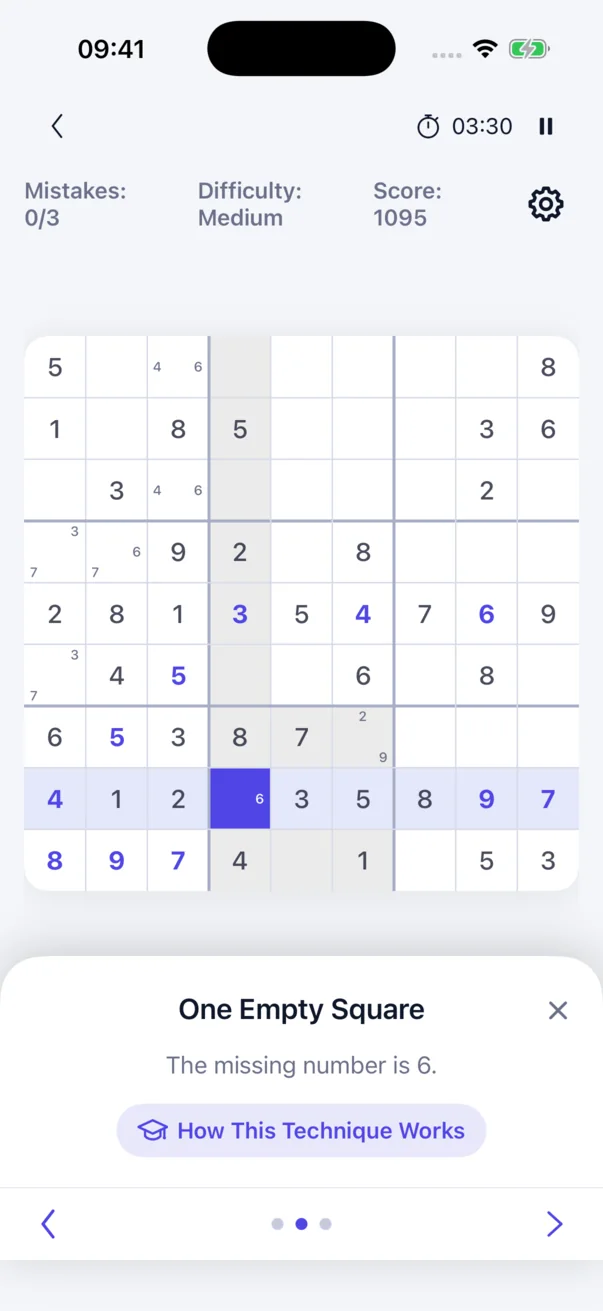
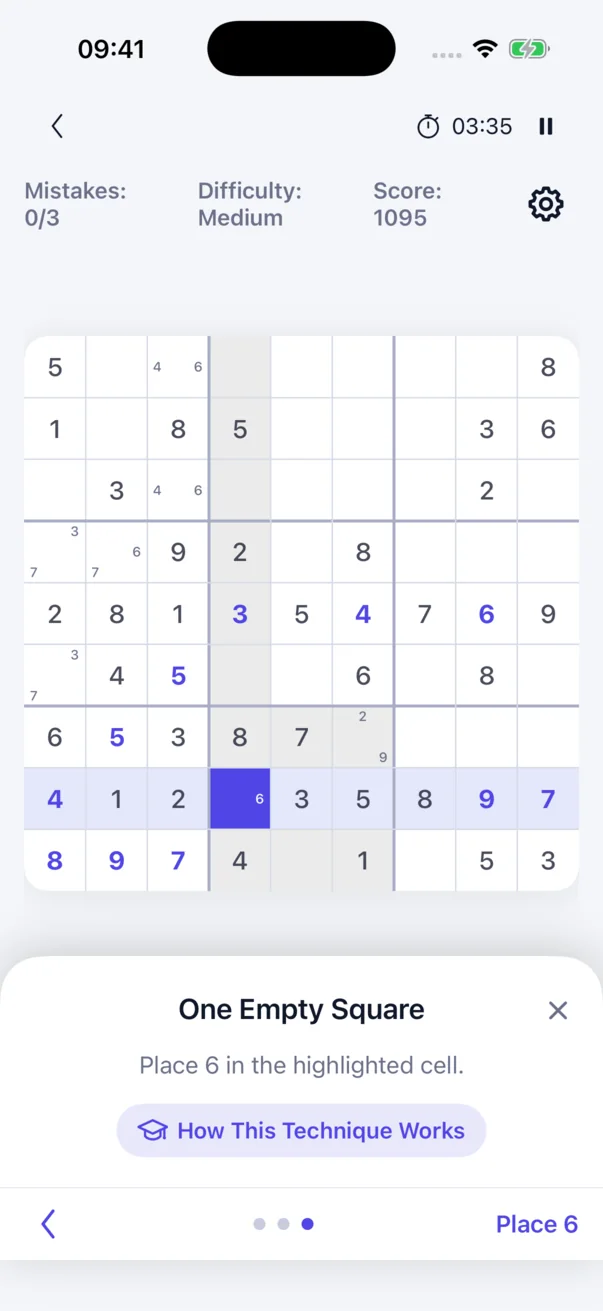
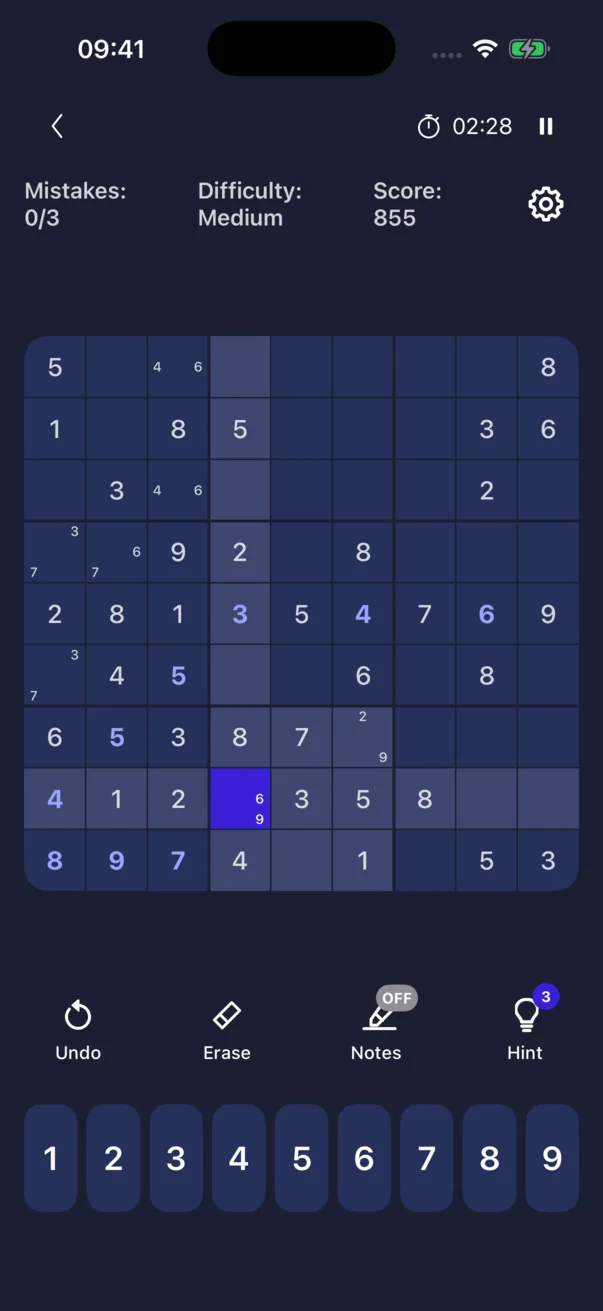
Sudoku that teaches. When you are stuck, a hint walks you through the deduction page by page instead of filling in the cell.
- Role
- Engine, iOS app, Android app, backend
- Platforms
- iPhone with iOS 17 and later, Android 8 and later
- Model
- Free with ads, optional Plus
- Localization
- 10 languages
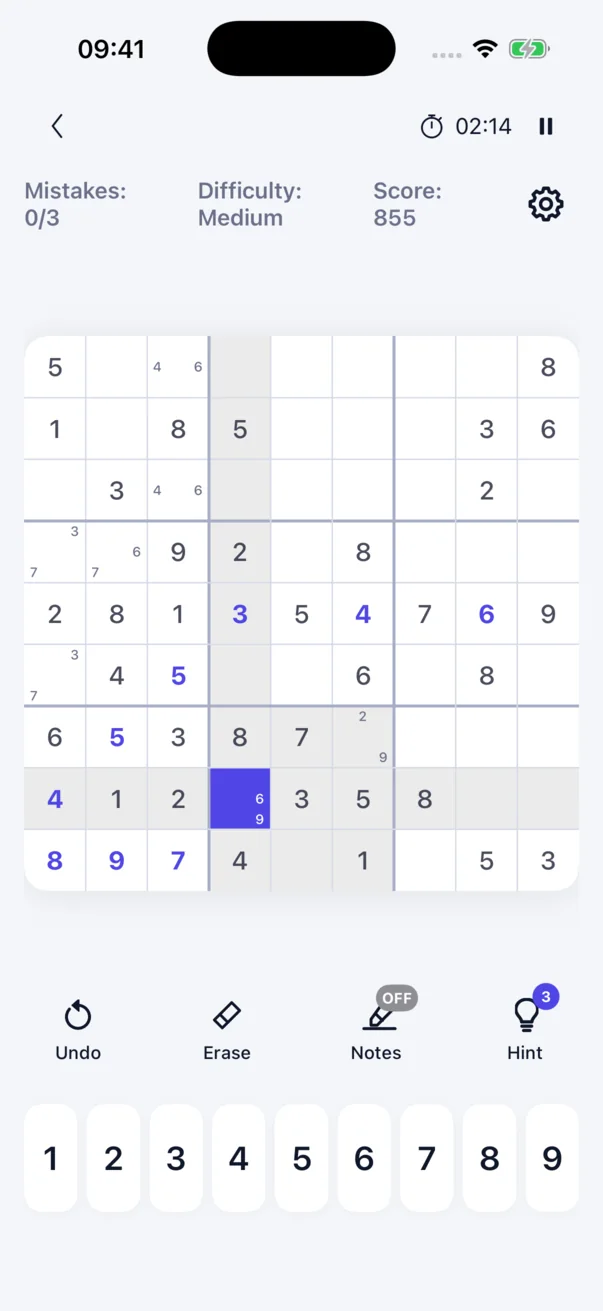
Most Sudoku apps give you the digit and teach you nothing.
When a player asks for help, the usual app fills in a cell. The player gets unstuck and learns nothing about why that digit belongs there.
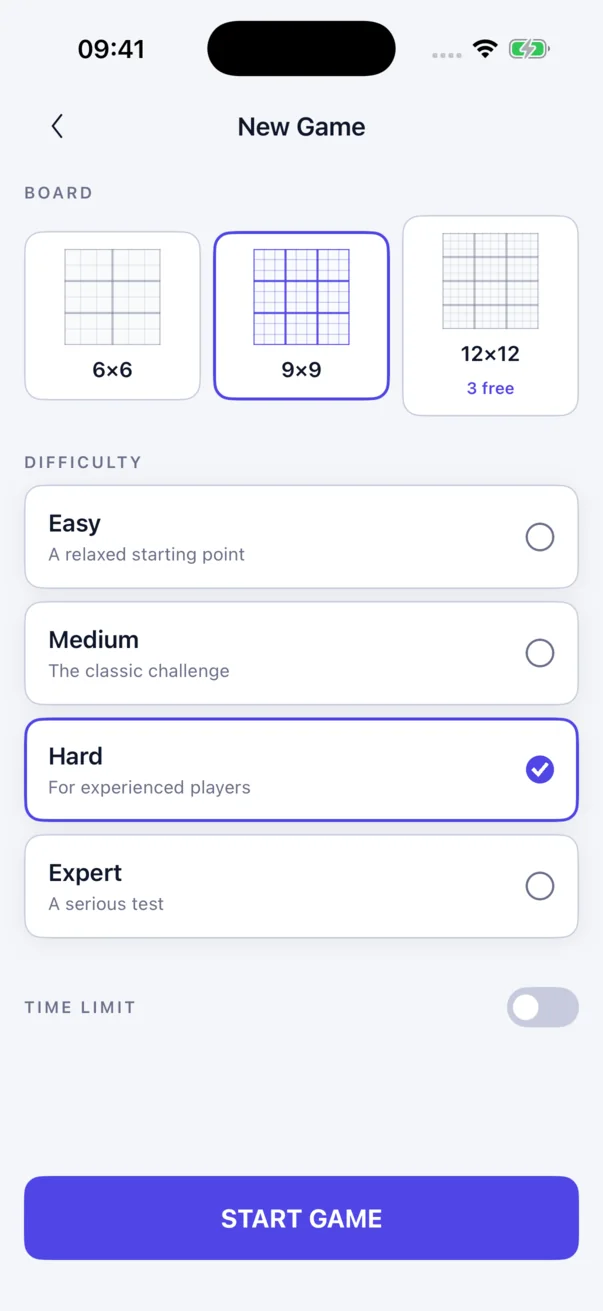
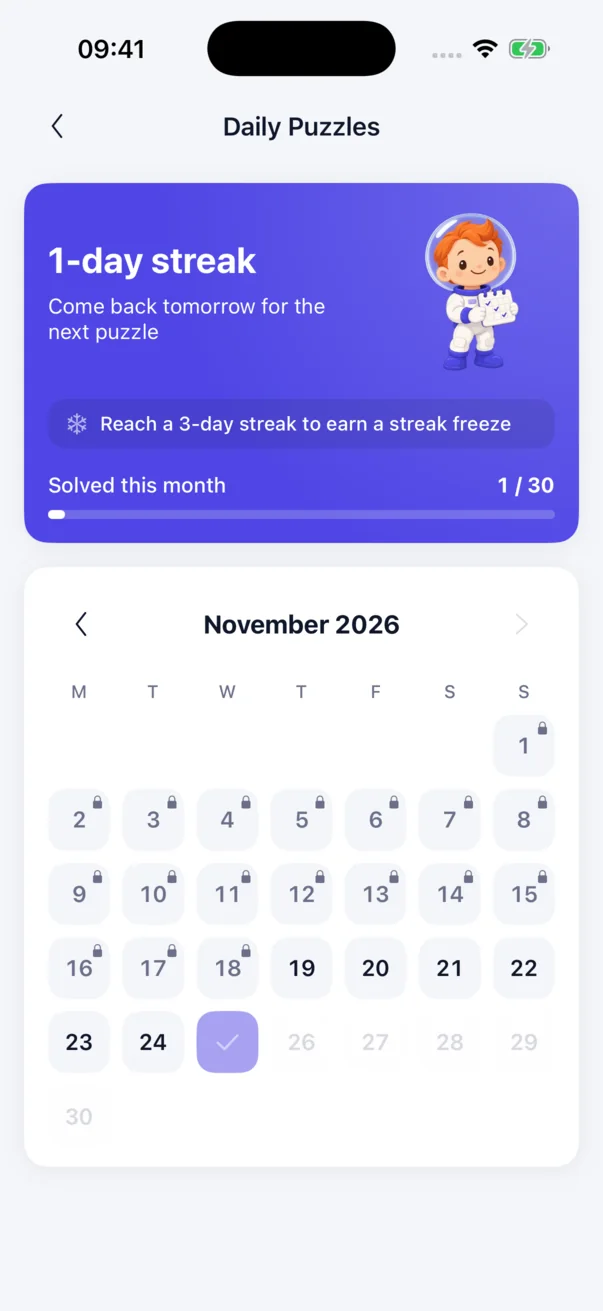
Cool Sudoku answers with the reasoning. A hint goes page by page: where to look, why, and which digit to place. On the 9×9 board hints name eight solving techniques. The game has boards of 6×6, 9×9 and 12×12, four levels and a Daily Puzzle that is the same for everyone.
One engine, two apps, one backend.
A Swift package with no interface code: generator, solver with a uniqueness check, the rules of a game, hints and the Daily Puzzle.
Swift 6, swift-collections, swift-crypto, Swift TestingSwiftUI with Observation, SwiftData for storage, StoreKit 2 for purchases, Swift Charts for statistics.
SwiftUI, SwiftData, StoreKit 2, Swift ChartsKotlin with Jetpack Compose and Material 3. It calls the Swift engine through a JNI bridge generated by swift-java.
Kotlin, Jetpack Compose, Coroutines, Play BillingA Go service with PostgreSQL: remote config and A/B experiments, push, history sync, analytics, crash reports and share links.
Go, PostgreSQL, Docker, RailwayWhere the engineering is.
One engine, two native apps
Puzzle generation, the rules of a game, hints and the Daily Puzzle are written once, in Swift. On Android the Kotlin app calls the same package through a JNI bridge generated by swift-java. A puzzle or a hint cannot differ between the two platforms, because it is the same code.
Swift package, JNI, swift-javaA hint explains, and always ends with a move
Techniques such as pairs and triples place nothing. They only remove candidates, so the next logical step often does not answer the player's question: what do I place? The engine applies those steps to its own copy of the candidates until one cell has a single digit left, then shows them as the reasons for that move. If no technique fits, the cell is revealed and the hint says so.
Eight named techniques on 9×9The Daily Puzzle moved from the server to the phone
At first the server issued and checked the daily puzzle, and the client hid it behind a remote flag. Now the puzzle is built on the device from the date, the level and a shared salt, and the server tables were dropped. A test pins the board to a reference string of 81 digits, so both platforms build the same puzzle.
On-device generation, reference testAn actor did not make saving safe
The game store is an actor, but a read, change and write sequence with an await in the middle can be interleaved with another mutation. Actor isolation does not protect it. I added an explicit queue of mutations inside the actor, with one continuation resumed at a time, and a test that saves concurrently.
Swift Concurrency, actor reentrancyPlay needs no network
Classic games and the Daily Puzzle are generated on the device, so the game works offline and asks for no sign-up. Only a puzzle opened from a shared link comes from the server.
On-device generation, offlineThe server is for everything except play
Because the game runs offline, the backend does the rest: remote config, A/B experiments, push through APNs and FCM, history sync, analytics, crash reports and share links. A player's variant in an experiment is a hash of the experiment key and the user id, so it stays the same across launches and platforms.
Go, PostgreSQL, APNs, FCMBuilds and store data without hand work
Xcode Cloud builds the iOS app and delivers it to TestFlight, and GitHub Actions delivers the Android builds. Prices, store metadata, localizations and screenshots were uploaded through the App Store Connect and Google Play Developer APIs. Submitting for review stays a manual step.
Xcode Cloud, GitHub Actions, App Store Connect API, Google Play Developer APIOne hint, three pages.
Everything it is made of.
- Engine
- Swift 6 package, swift-collections, swift-crypto
- iOS
- SwiftUI, Observation, SwiftData, StoreKit 2, Swift Charts, UserNotifications, Google Mobile Ads
- Android
- Kotlin, Jetpack Compose, Material 3, Coroutines, DataStore, Google Play Billing, Firebase Cloud Messaging
- Backend
- Go, REST, PostgreSQL, SQL migrations, Docker, Railway
- Delivery
- Xcode Cloud, TestFlight, GitHub Actions, App Store Connect API, Google Play Developer API
- Tests
- 396 tests in the Swift package (engine and app logic) with Swift Testing, Go tests for the backend
Need this kind of engineering on your team?
I am available now for a senior iOS or macOS role.
 Next case studyCrazy Checkers